Author archives: Robert Vanderzweerde
Music with vocal / instrumental parts
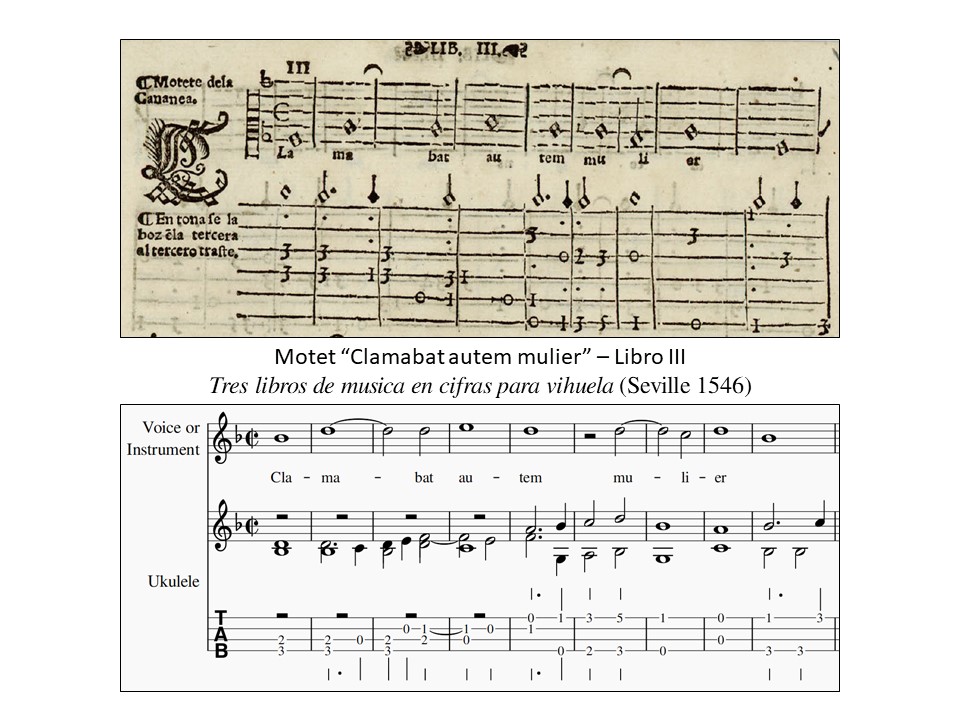
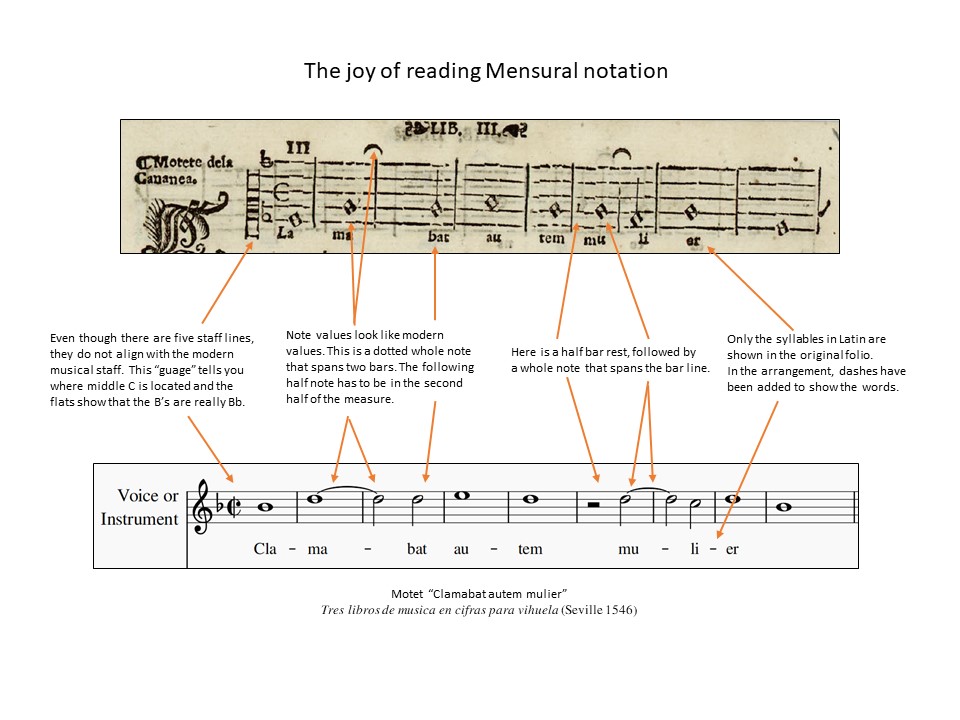
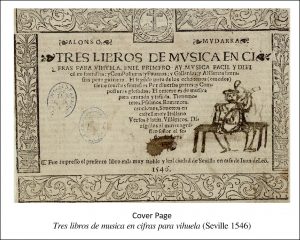
Libro III of “Tres libros de musica en cifras para vihuela” (1546) by Alonso Mudarra has a series of pieces for voice with vihuela accompaniment. In most other books, the vocal part is written in the same tabulature as the instrumental part with either a different colour or other marking to separate the parts (in fact, two of the pieces are written this way). Mudarra presents this differently with separate systems for each part. The vihuela lines use standard Italian tabulature (i.e. the highest sounding string is on the lowest line of music) using vihuela tuning. The voice is presented using Mensural notation (which I am learning how to read; good explanation in Wikipedia) but with a twist – there are bar lines in the music and it is aligned with the vihuela bar lines. The illustration attached of a Motet shows this as well as my arrangement for ukulele and voice/instrument (i.e. the voice line need not be sung, it can be played using any instrument such as a flute or oboe). I am looking up the words, in Latin in this case, and translations to ensure that I get them right as the original folio does not show the words, only the syllables – in my arrangement, the syllables are joined with dashes to form words. It’s a bit of a mind bender but it’s actually satisfying to hear the software play the music with ukulele and recorder.

Words
Clamabat autem mulier channanea ad Dominum Jesum, dicens: Domine Jesu Christe, fili David, adiuva me; filia mea male a demonio vexatur.
Respondens ei Dominus dixit: Non sum missus nisi ad oves quae perierunt domus Israel.
At illa venit et adoravit eum dicens: Domine, adiuva me.
Respondens Jesus ait illi: Mulier, magna est fides tua, fiat tibi sicut vis.
Translation
A woman of Canaan cried to the Lord Jesus, saying: Lord Jesus Christ, son of David,
help me; my daughter is grievously troubled by a devil.
And he answering, said: I was not sent but to the sheep, that are lost of the house of Israel.
But she came and adored him, saying: Lord, help me.
Then Jesus answering, said to her: O woman, great is thy faith: be it done to thee as thou wilt.

Subsequently, in April 2022, several versos and psalmos were made available for free and, in May 2022, two books of vocal/instrumental music by Mudarra were published.
Working on music by Mudarra
Working on the music of Alonso Mudarra (ca 1510 – 1580), a Spanish composer, from his 1546 publication Tres libros de musica en cifras para vihuela (three books of music in numbers for vihuela). It’s quite refreshing after the dense and complex music of Fuenllana. Of course, reading Spanish tabulature is always challenging as it’s upside down to our modern notation. I’m starting with the first two libros (books) which are for vihuela or guitar only. The third and thickest libro has both vihuela and voice presented in separate staff lines which are aligned, much like a modern multi-part score (the music of Milan had the vihuela/voice lines combined but in different colours with the voice noted in red). I’ll need to learn how to read the voice notation, which makes arranging both challenging and enjoyable.

Subsequently, in April 2022, three books of instrumental music were published and, in May 2022, two books of vocal/instrumental books were published. Several versos and psalmos where were also made available for free.
Vihuela, Lute and/or Guitar
When music written for vihuela or lute is arranged for ukulele, there is some loss in the bass as the vihuela/lute has 6 strings while the ukulele (or Renaissance guitar) only has 4 strings. I do have to figure out the harmonies/chords to try to preserve what the composer intended but with a smaller range of notes.
Is anyone interested in arrangements that preserve the 6 string configurations? In other words, I would be arranging the music for vihuela, lute, or guitar with an F# tuning for the third string. Mel Bay has already done this with all 40 Fantasias in Milan’s “El Maestro” where all the music is transcribed/arranged for 6-string instruments. There are others who do this as well for individual pieces, but you have to hunt for them.

Working on music by Fuenllana
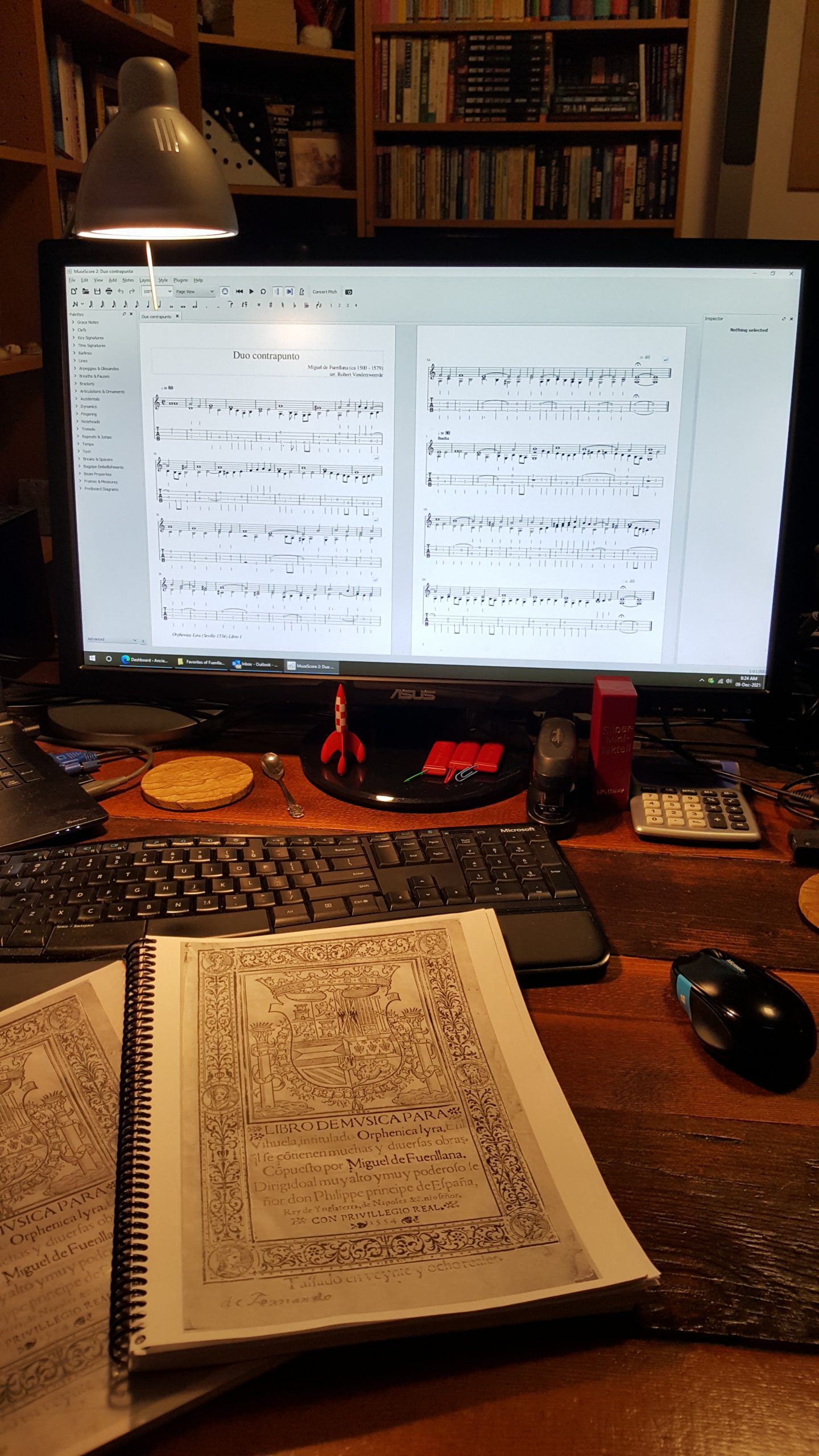
I’ve started arranging the the music by Miguel de Fuenllana (ca 1500-79) in his publication Orphenica Lyra (1554), especially the pieces written by the composer. There are 188 pieces in the six volume set of which 62 are written by Fuenllana with 52 fantasias, 8 tientos and 2 duos. The rest are arrangements or transcriptions by other Spanish, Flemish and Italian Renaissance composers of hymns, masses, motets, villancicos, outrages, madrigals, dirges, romances and sonnets.

Update January 12, 2022 – Wow, the fantasies by Miguel de Fuenllana (ca 1500 – 1579) in “Orphenica Lyra” are challenging. They are pieces of “great solidity and complexity, with dense counterpoints”. Many of them are marked as “dificil” and only a few are “facil”. My arrangements may be just one of many possible interpretations. No wonder they’re not heard too often.
Update March 7, 2022 – Now finished, four books of vihuela music written by Miguel de Fuenllana. The works in Orphenica Lyra (1554) are challenging with even the “facil” (easy) pieces requiring advanced performance capabilities. The music is dense and difficult to interpret so my arrangements for ukulele may be only one of many possibilities. The books are available for sale and recordings are available on YouTube.
Re-starting after a hot summer in Canada
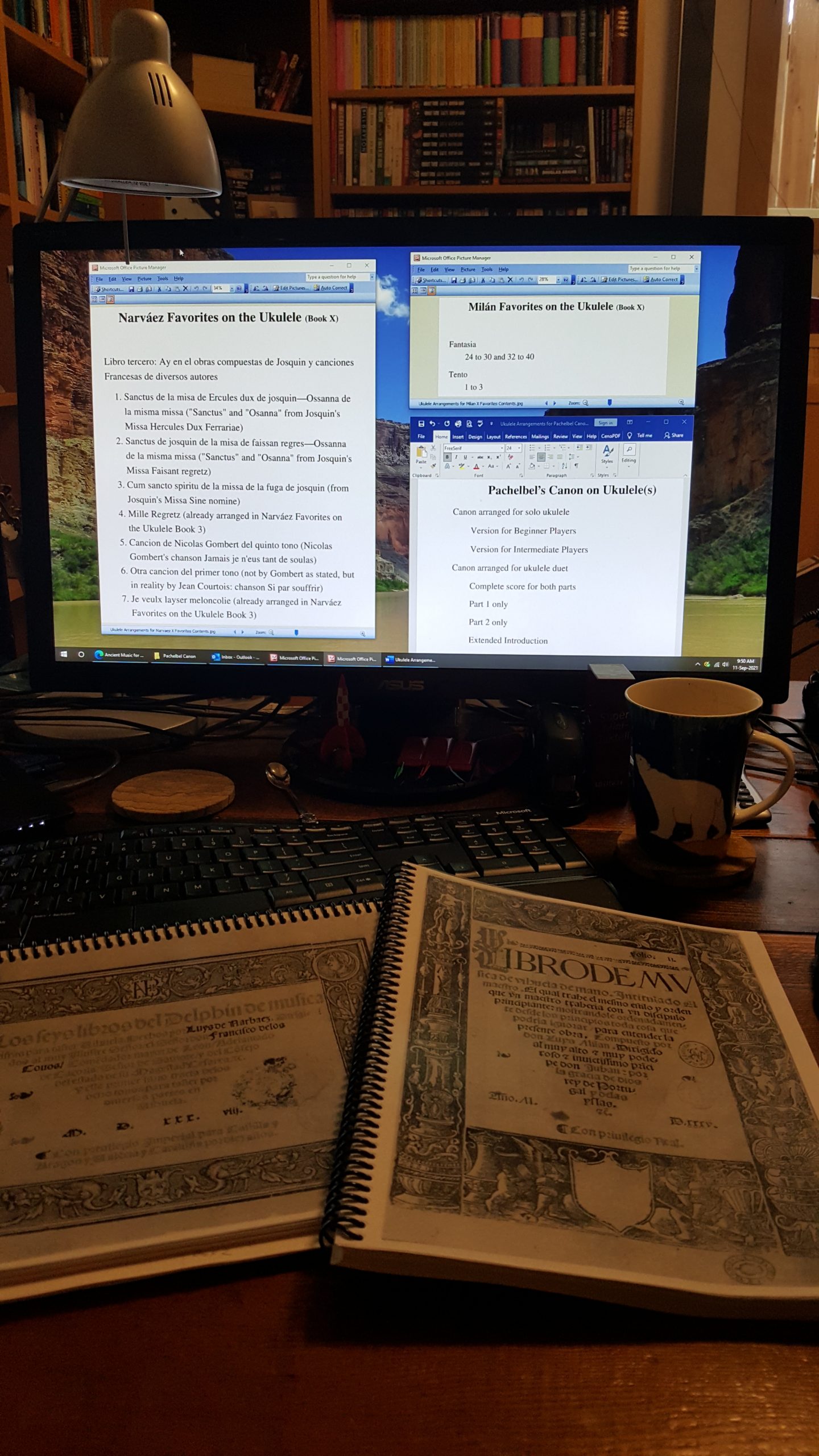
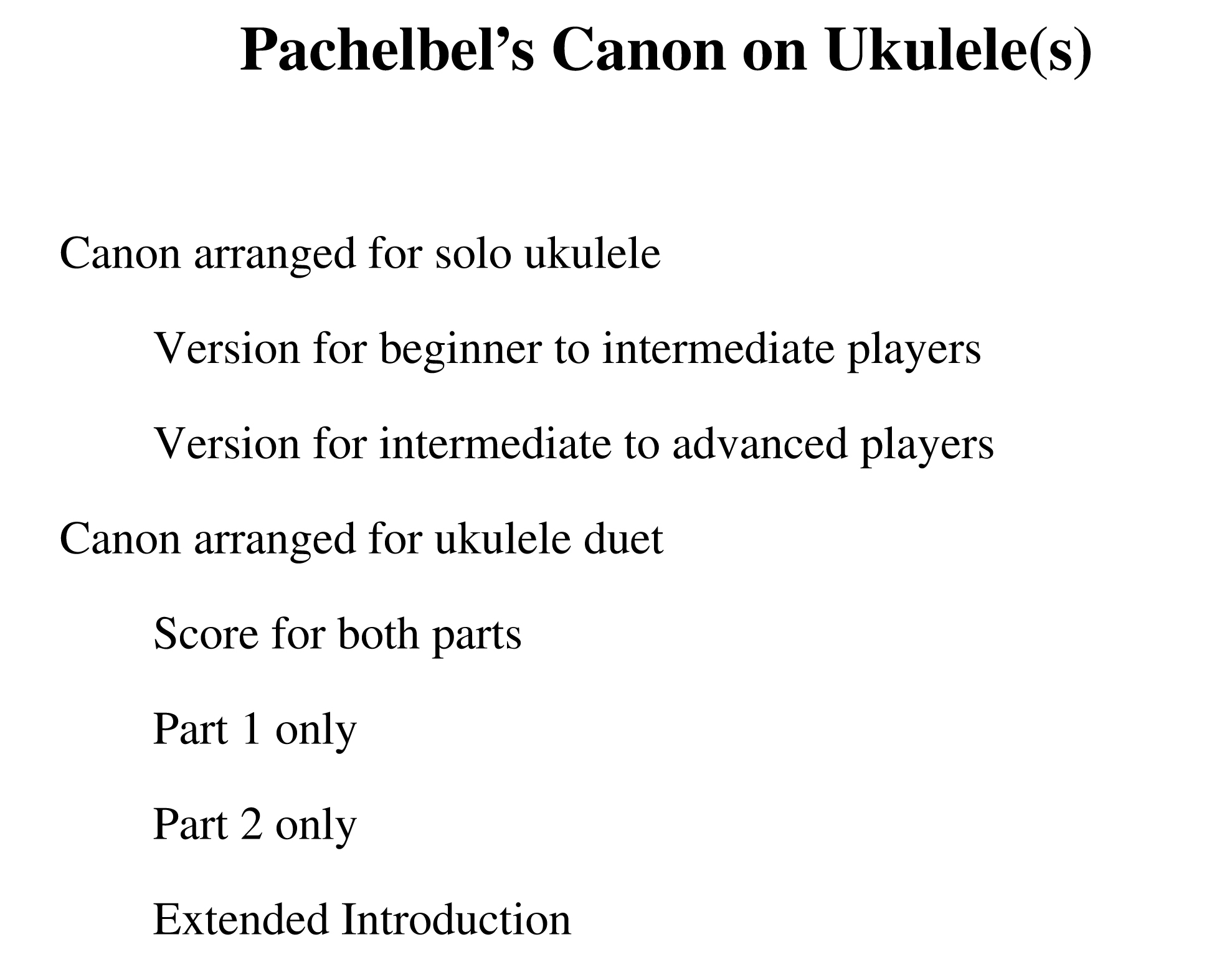
Okay, I’m almost ready to re-start working on ancient music after a hot summer of travel within Canada. It’s still quite pleasant in the mountains this September so I’m enjoying the outdoors as much as possible before the cold weather settles in. In the meantime, here are my thoughts on composers/music to arrange first (see photo), including detailed work on the Canon by Pachelbel for both duet and solo ukuleles based on a request from a follower. If you have any favourite music/composers from the Medieval, Renaissance or early Baroque, please let me know.

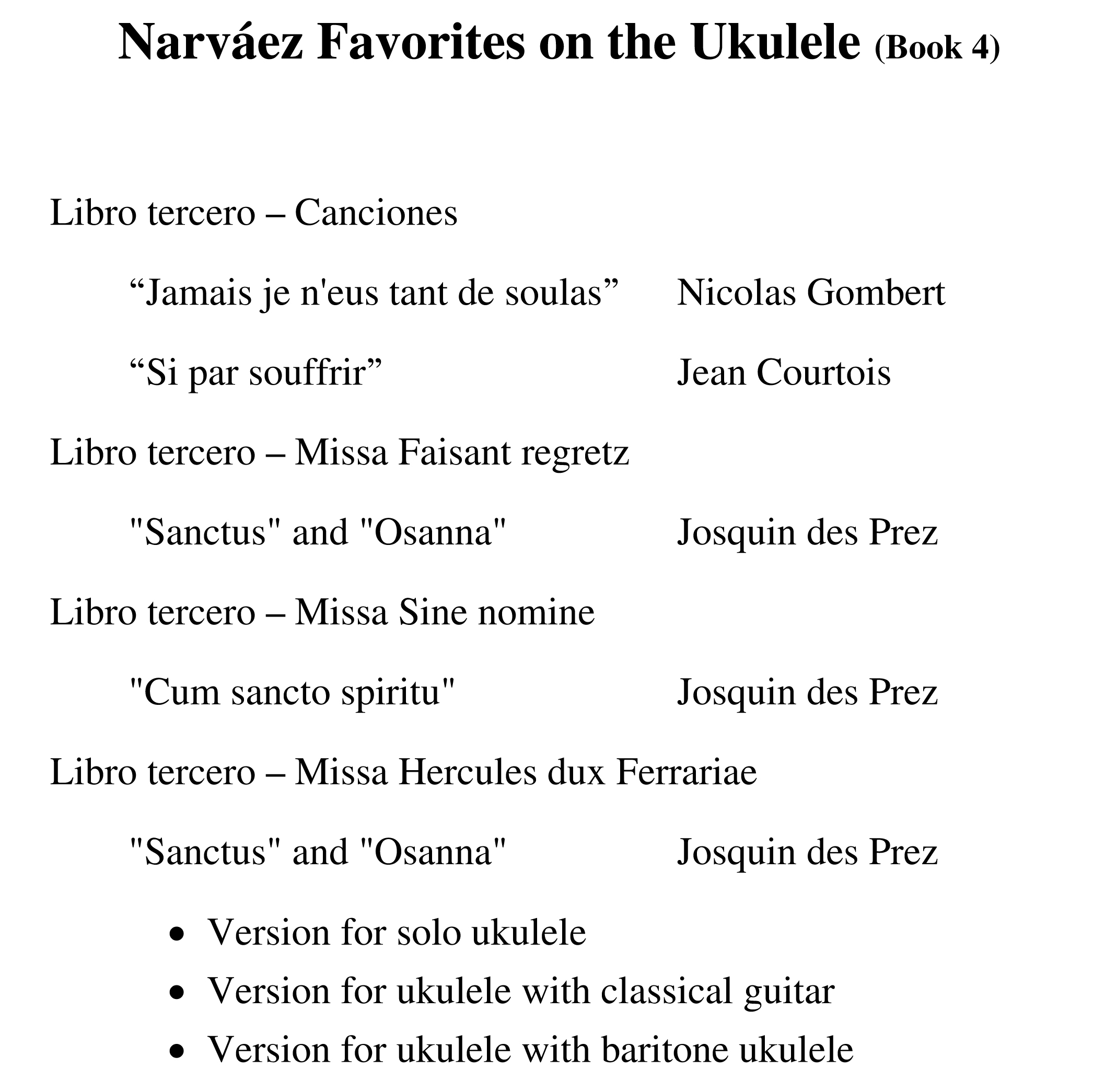
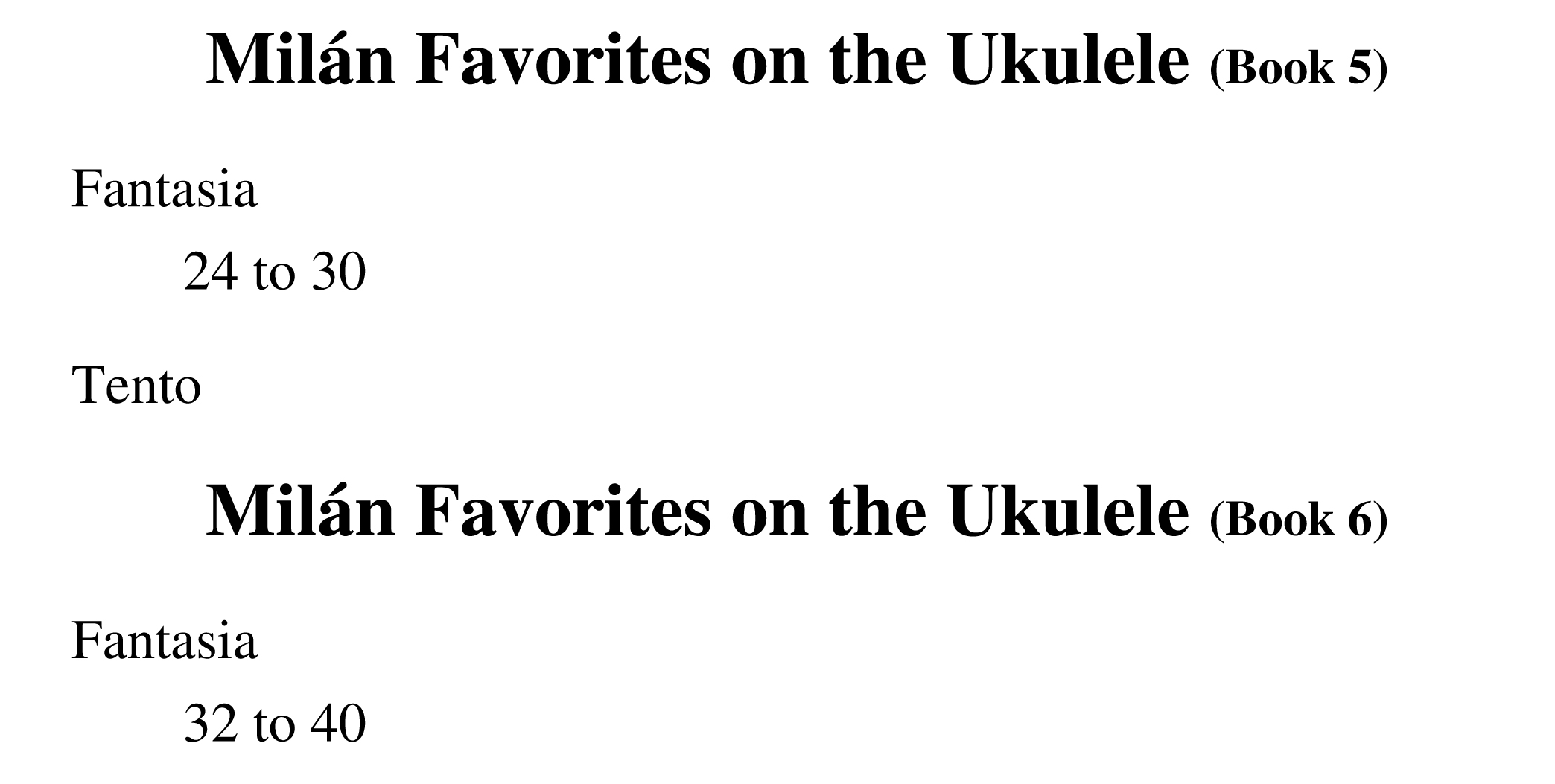
Update October 13, 2021 — the book Pachelbel’s Canon on Ukulele(s) is now available. Update October 23, 2021 — the book Narváez Favorites on the Ukulele (Book 4) is now available. Update November 27, 2021 — — the books Milan Favorites on the Ukulele (Books 5 and 6) are now available.
Choosing who to arrange next

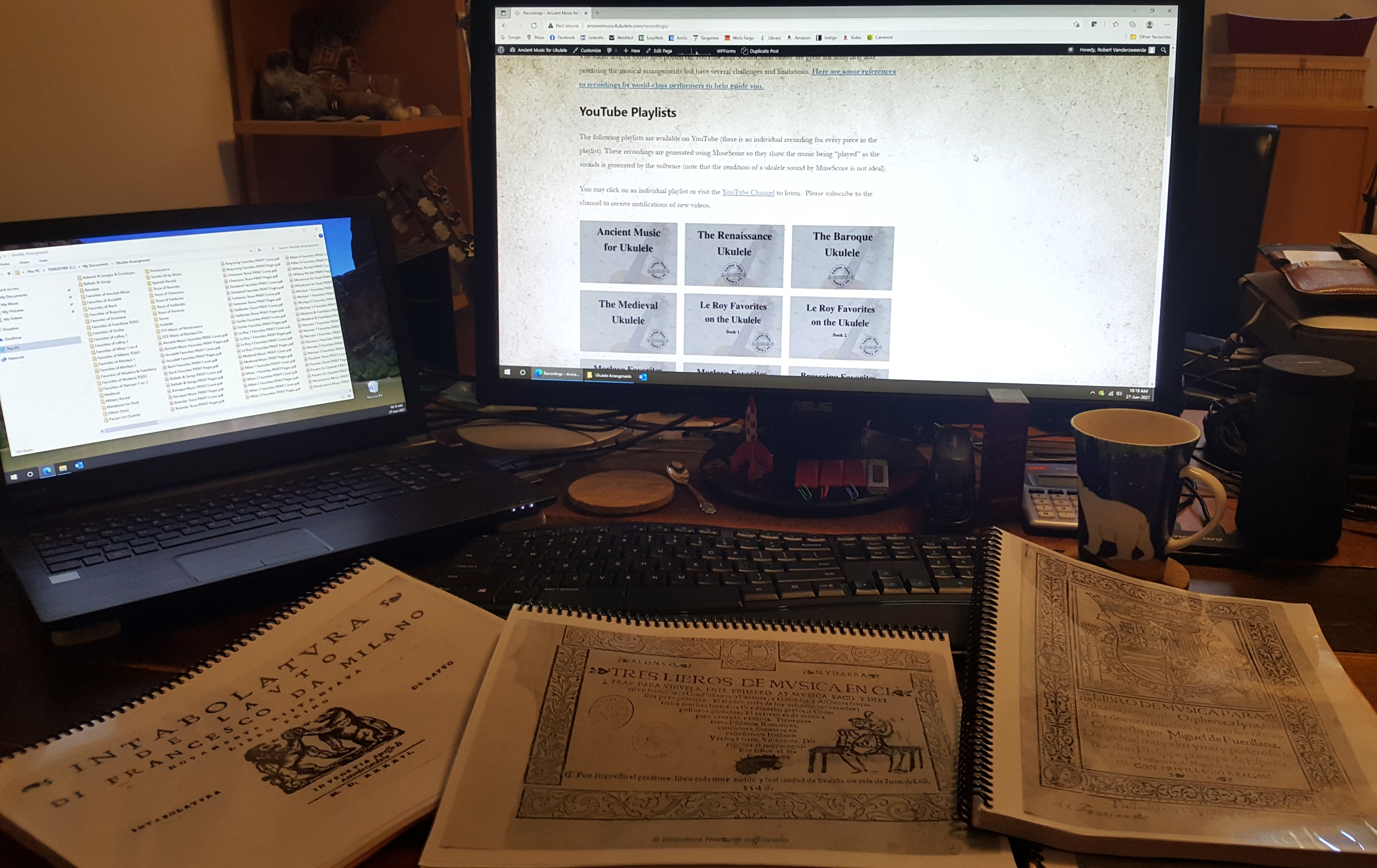
Choices, choices, choices. Who to arrange next? From left to right:
- Intabolatura de lauto (in 4 volumes) by Francesco da Milano (ca 1497 – 1543)
- Tres libros de musicaa en cifras para vihuela (in 3 volumes) by Alonso Mudarra (ca 1510 – 1580)
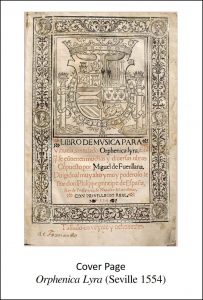
- Orphenica lyra, libro de musica para vihuela (in 6 volumes) by Miguel de Fuenllana (ca 1500 – 1579)
Do you have a favorite? I’ll likely start with Mudarra or Fuenllana. BUT, I’m taking the summer off to enjoy the outdoors. See you in September.
Researching music by Luys de Narváez
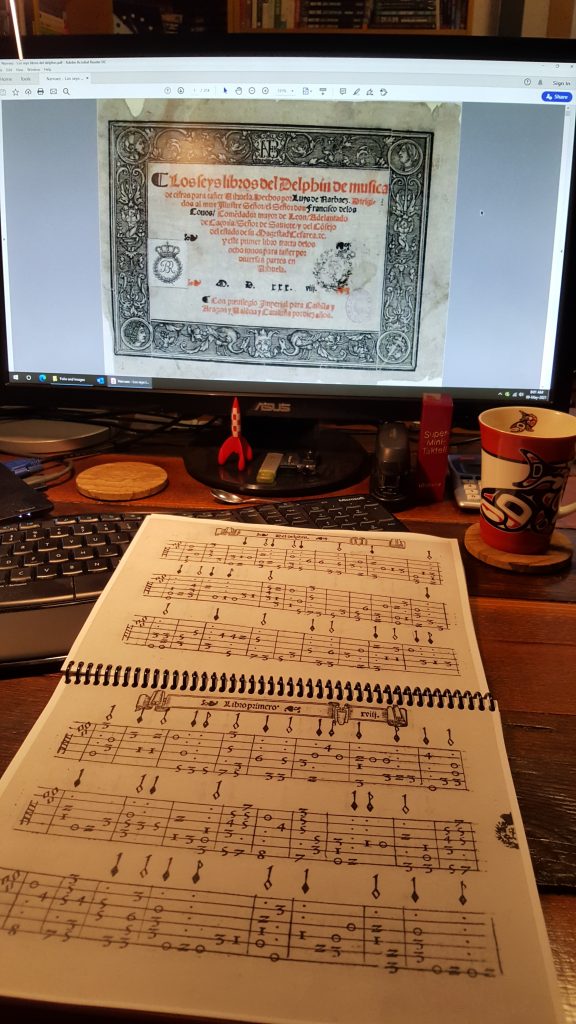
The works of Luys de Narváez (flourished 1526-49) in Del Delphin are beautifully illustrated and presented (the computer screen photo below show a scan of the cover). Printed in 1538, it is actually a set of six books (hence the full title of Los seys libros del delphin) of polyphonic music for the vihuela. Although Narváez was Spanish, he adapted the contemporary Italian style of lute music. He was highly regarded during his lifetime, particularly for his vihuela playing and ability to improvise. With the exception of two motets, no other works of Narváez survives.
The challenge of reading this music today is twofold, the tuning of the vihuela which has a third string which is tuned a half tone lower than a ukulele or guitar, and the Italian tabulature which is “upside down” to our modern tabulature (i.e. the lower line on the printed page corresponds to the highest sounding string on the vihuela). Of course, the vihuela has 6 string courses so the bass notes on the lowest sounding strings need to be harmonically analyzed and rewritten/arranged to fit the 4-stringed ukulele. I would also arrange the music so that you do not have to re-tune the ukulele.
The works in Del Delphin include the first known variation sets. There are six diferencias, in the 4th to 6th volumes, most of them with 3 to 7 variations however one of the pieces has 22 variations.

PS. The small rocket ship is a figurine based on the Tintin books “Destination Moon” and “Explorers on the Moon”. The silver coffee spoon is a Dutch tradition and this spoon was given to me when I was just one year old and is expected to last my lifetime. The Canadian art on the mug is a salmon by artist Jamie Sterritt. And yes, I still us a mechanical metronome from when I first started learning classical guitar.
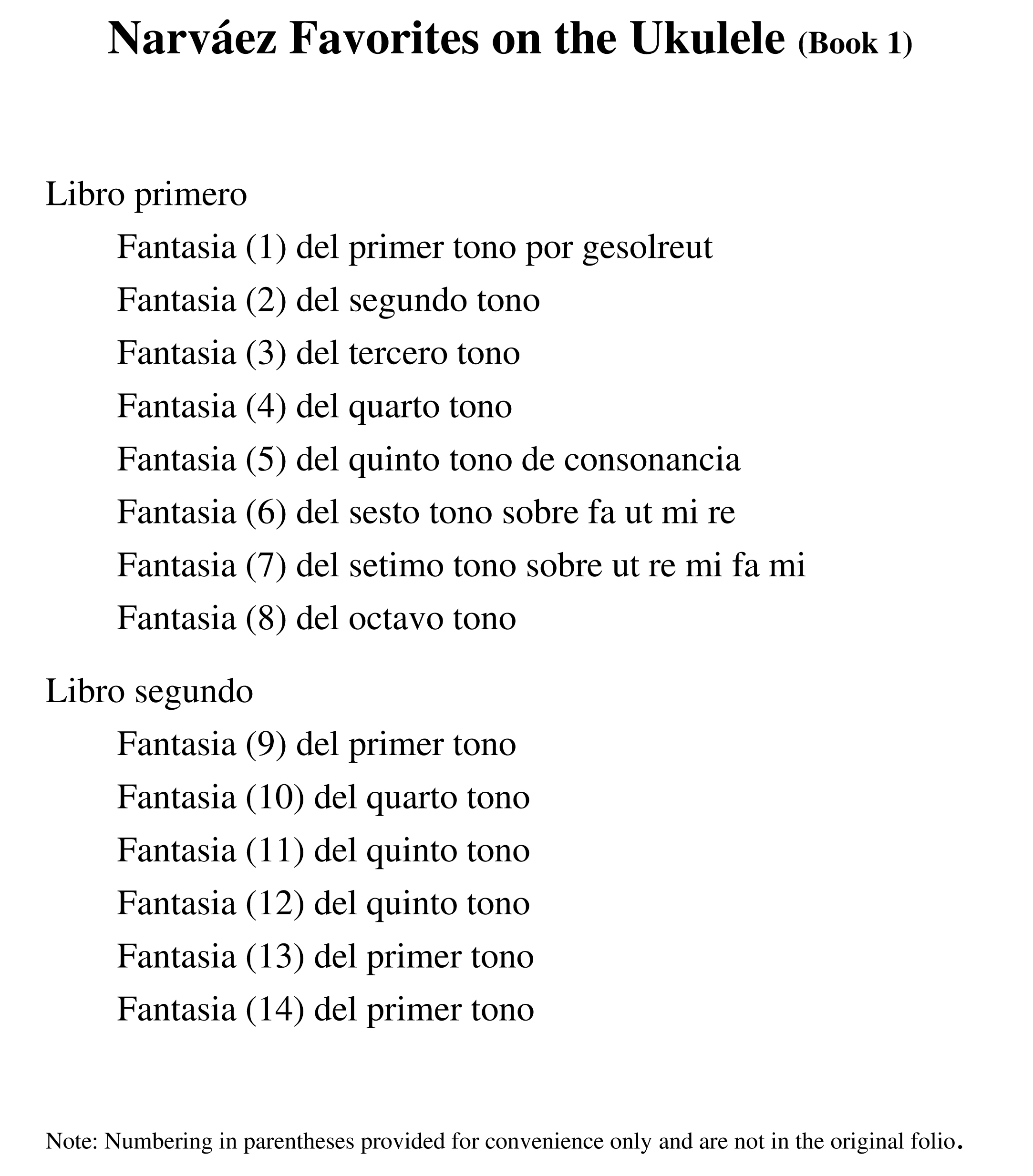
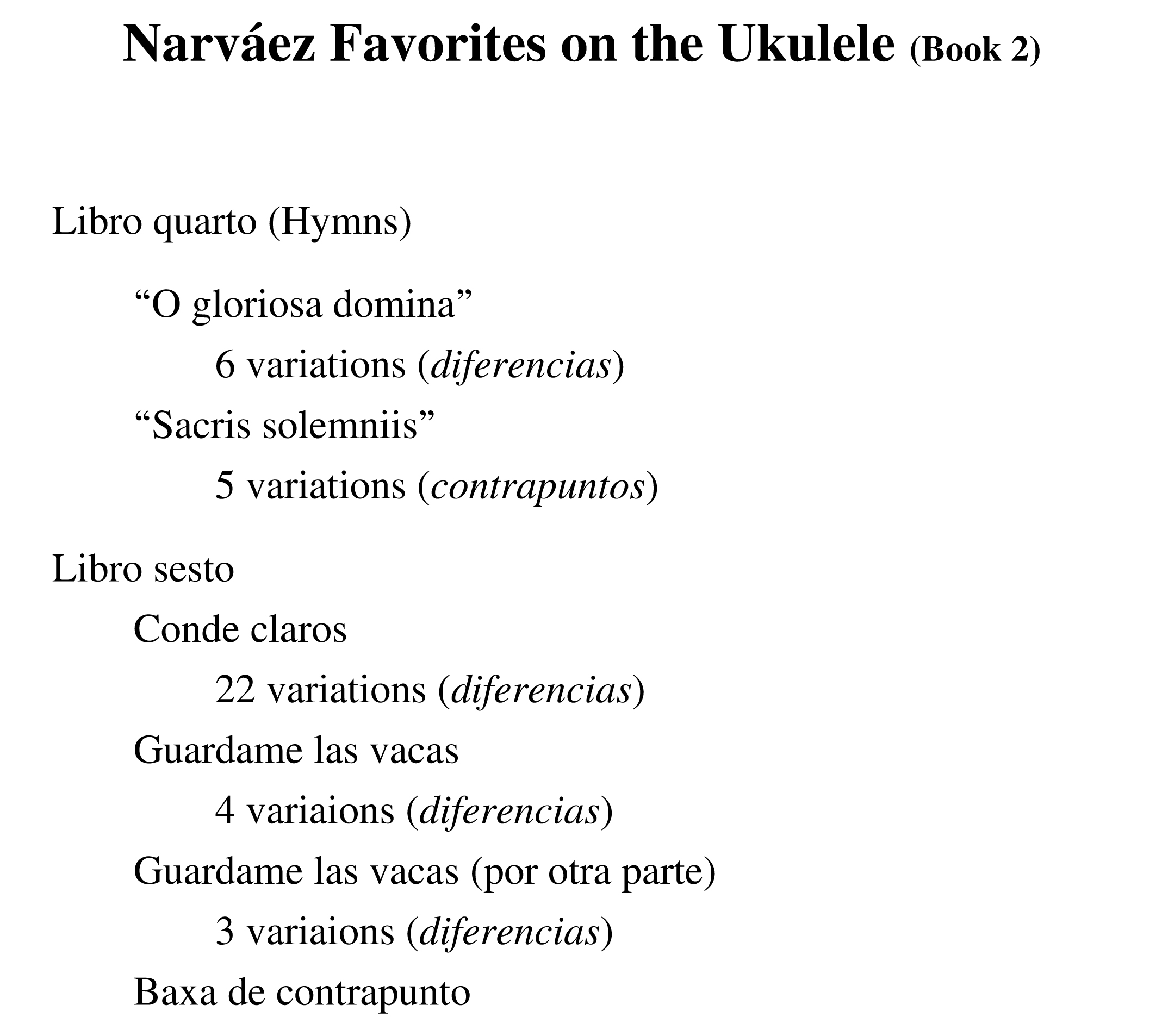
Update as of June 4, 2021 — Two books of arrangements of Narváez’s music are now complete and available (click on an image below to see an expanded view).
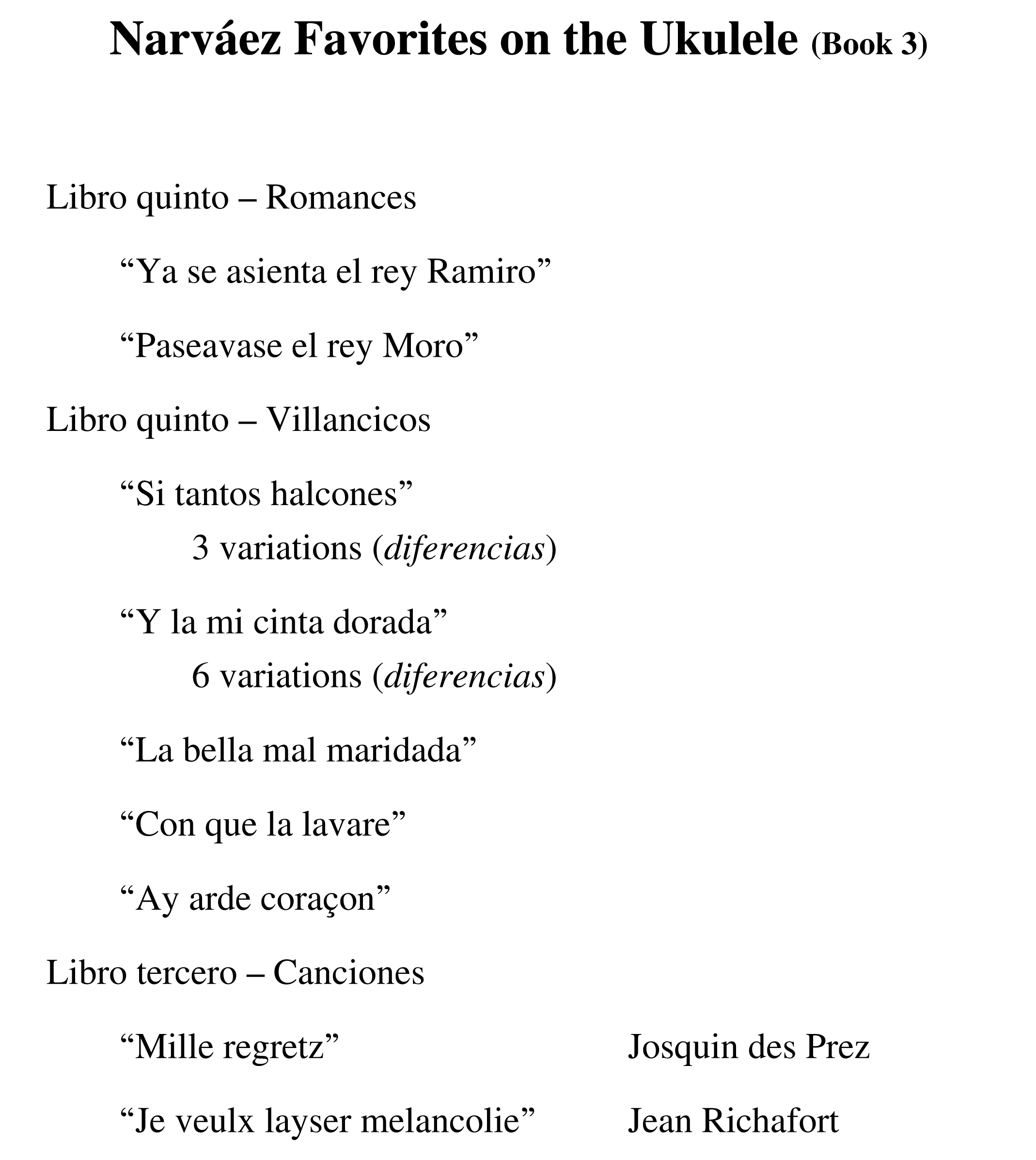
Update as of June 16, 2021 — Third book of arrangements, with lyrics, of Narváez’s music is now complete and available (click on an image below to see an expanded view).
Recordings by Performers
The audio and/or video files posted on YouTube and SoundCloud are great for analyzing and practising but have several challenges and limitations, namely the sound generated by the software which is not close to sounding like a ukulele, the slow speeds chosen to allow you to practice by playing along which makes the music sound plodding in some cases, and the total lack of performance dynamics (tempo, volume, part differentiation, phrasing, strum versus block chords, etc).
Here are some references to recordings by world-class performers to help guide you.
Here are some recordings of Renaissance music by vihuela and lute performers that have inspired my arrangements:
| Performer | Instrument | Album | Composers Featured | Label |
| Jose Antonio Escobar | Vihuela | El Maestro, Libro 1 (1536) | Milán | Naxos |
| Ralph Maier | Vihuela | The Art of the Vihuela | Narváez, Mudarra, Milán, Fuenllana, Daza, Valderrabano | Private |
| Christopher Wilson | Vihuela | Music for Vihuela | Milán, Narváez | Naxos Early Music |
| Christopher Wilson, Shirley Rumsey | Lute | Lute Music – Fantasias, Ricercars and Duets | Milano | Naxos Early Music |
| Christopher Wilson, Shirley Rumsey | Lute | Lute Music | Johnson (John) | Naxos Early Music |
| Christopher Wilson, Shirley Rumsey | Lute | Pavans and Galliards | Holborne, Robinson | Naxos Early Music |
| Nigel North | Lute | The Prince’s Almain | Johnson (Robert) | Naxos |
| Robert Barto | Lute | Solo Works for Lute | Hagen | Naxos |
| Christopher Wilson | Lute | Lute Music – Ricercars, Intabulations, Dances | Dall’Aquila, Da Crema | Naxos Early Music |
| Shirley Rumsey | Lute | Music of the Italian Renaissance | Arcadelt, Azzaiolo, Milano, Cara, Dalza, Caprioli, Capirola, Spinacino, Tromboncino, Aquila, Despres, Borrono, Nola | Naxos Early Music |
| Marco Pesci | Lute | Renaissance Lute Music | Liuto, Palestrina, Lasso, Rore | Naxos |
| Shirley Rumsey | Lute | Music of the Spanish Renaissance | Uppsala, Daza, Narváez, Fuenllana, Milán, Pisador, Morlaye, Mudarra, Valderrabano | Naxos Early Music |
| Christopher Wilson, Shirley Rumsey | Lute | Early Venetian Lute Music | Dalza, Spinacino, Bossinensis, Capirola | Naxos Early Music |
| Nigel North | Lute | John Dowland Lute Music (Volumes 1 to 4) | Dowland (John) | Naxos |
| Marc Lewon & Paul Kieffer & Grace Newcombe | Plectrum Lute & Voice | Two Lutes with Grace (Plectrum Lute Duos of the Late 15th Century) | Agricola, Bedyngham, Dalza, Des Prez, Frye, Ghiselin, Ghizeghem, Roelkin, Spinacino, Tinctoris | Naxos Early Music |
Here are some recordings of Baroque music by lute and other performers that have inspired my arrangements:
| Performer | Instrument | Album | Composers Featured | Label |
| Nigel North | Lute | Bach on the Lute (Volumes 1 to 4) | Bach | Linn Records |
| Yasunori Imamura | Baroque Lute | Complete Works for Lute | Bach | Naxos |
| Robert Barto | Baroque Lute | Weiss Sonatas for Lute (Volumes 1 to 11) | Weiss | Naxos |
| Danijel Cerovic | Guitar | Works for Lute … arranged for guitar | Weiss | Naxos |
| Jeffrey McFadden | Guitar | Cello Suites (Volume 1) … arranged for guitar | Bach | Naxos |
For your information, I own every CD in the Naxos Guitar Collection (most of them produced by Norbert Kraft) and Naxos Laureate Series for Guitar. Of course, I have recorded music from Segovia (who I saw in concert in Washington DC in 1980), Yepes and others, as well as recordings by every one of my teachers/leaders (Beauvais, Mahon, Maier, Visscher, Arnold, Bradley) at the Royal Conservatory of Music (Toronto), the Mount Royal Conservatory of Music (Calgary) and the Asylum for Art (Calgary).
Working on music by Luys Milán
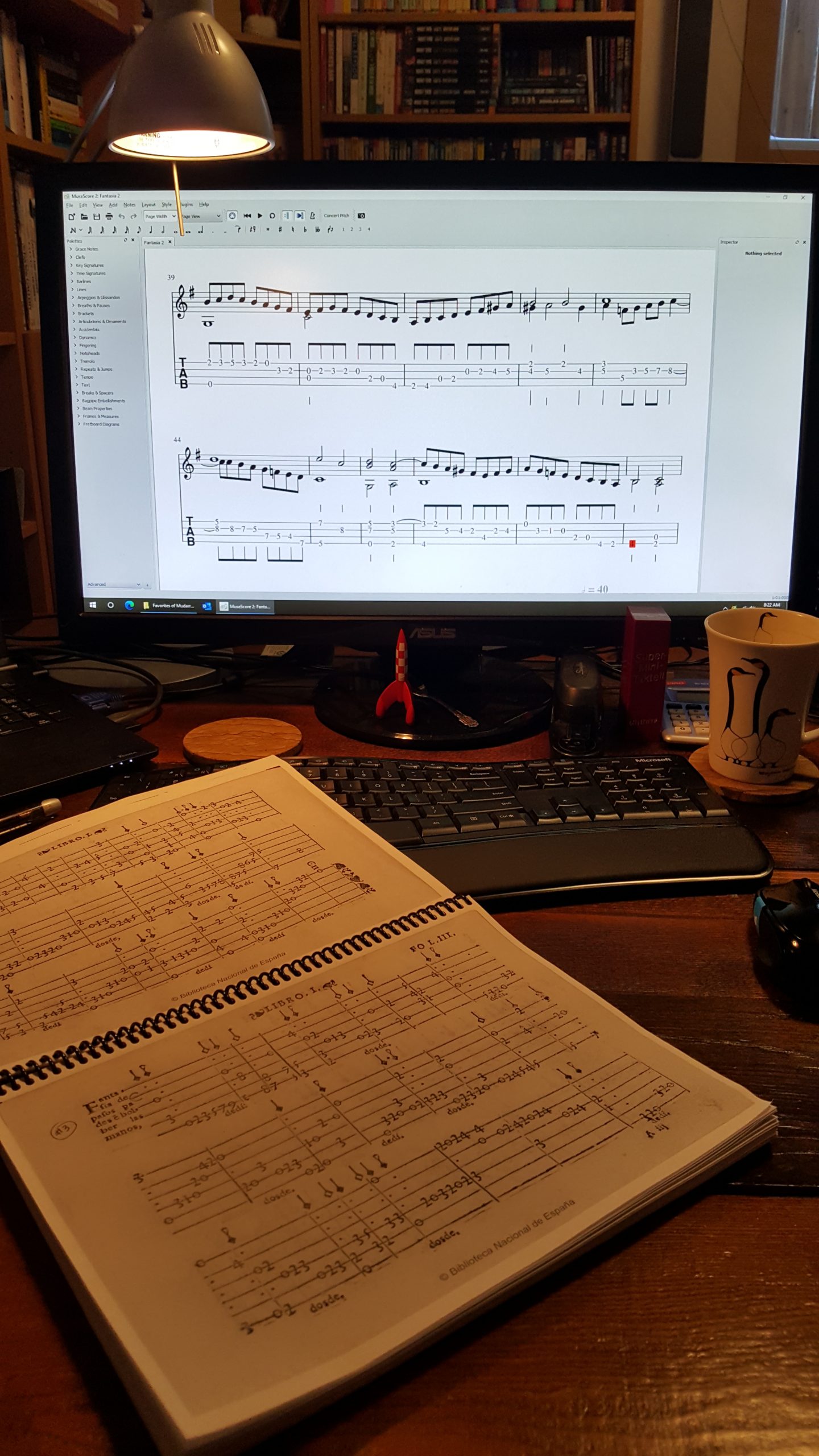
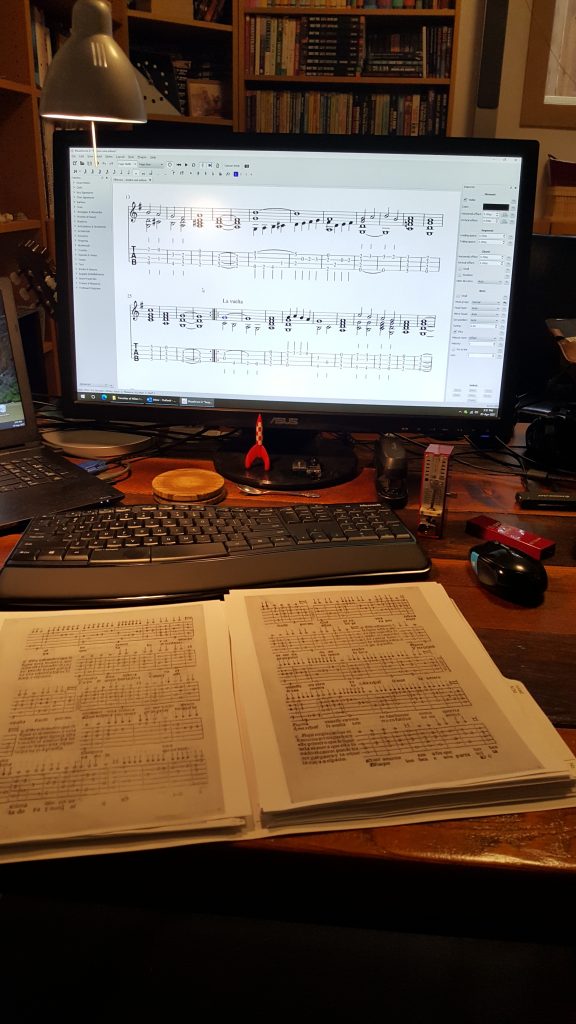
Here’s what my workspace looks like while I’m arranging music (in this photo, a villancico by Luys Milan from 1536). I try to work from the original folio as shown (El Maestro is 200 pages long). I also try the fingering on my ukulele (not in the photo as it’s hung around my neck) and adjust the arrangement or put in some fingering tips. Yes, I have an old fashioned mechanical metronome which I’ve used for decades. It takes from 1 to 4 hours per page of music, depending on the complexity. I’m happy to answer any questions you may have about this process … the software you see is MuseScore.

PS. The small rocket ship is a figurine based on the Tintin books “Destination Moon” and “Explorers on the Moon”. The silver coffee spoon with my initial R on it is a Dutch tradition and this spoon was given to me when I was just one year old and is expected to last my lifetime.
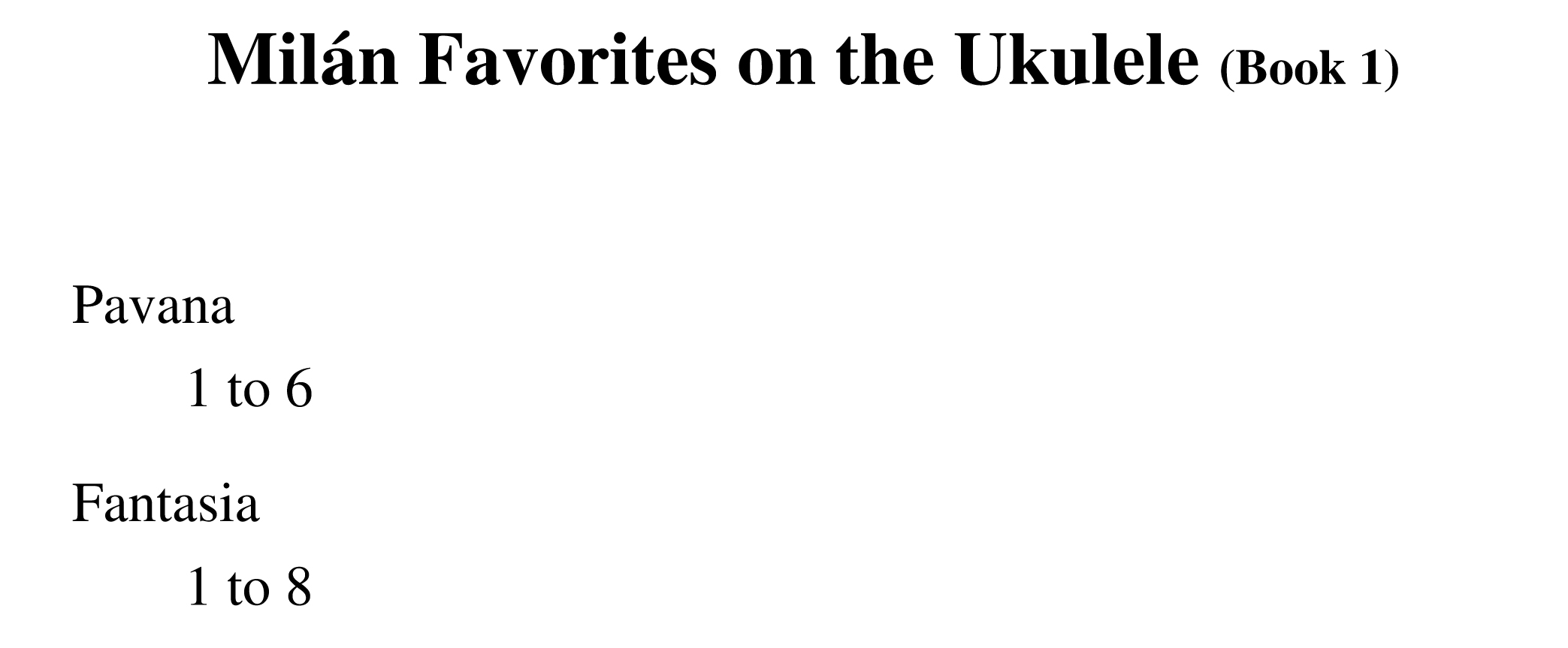
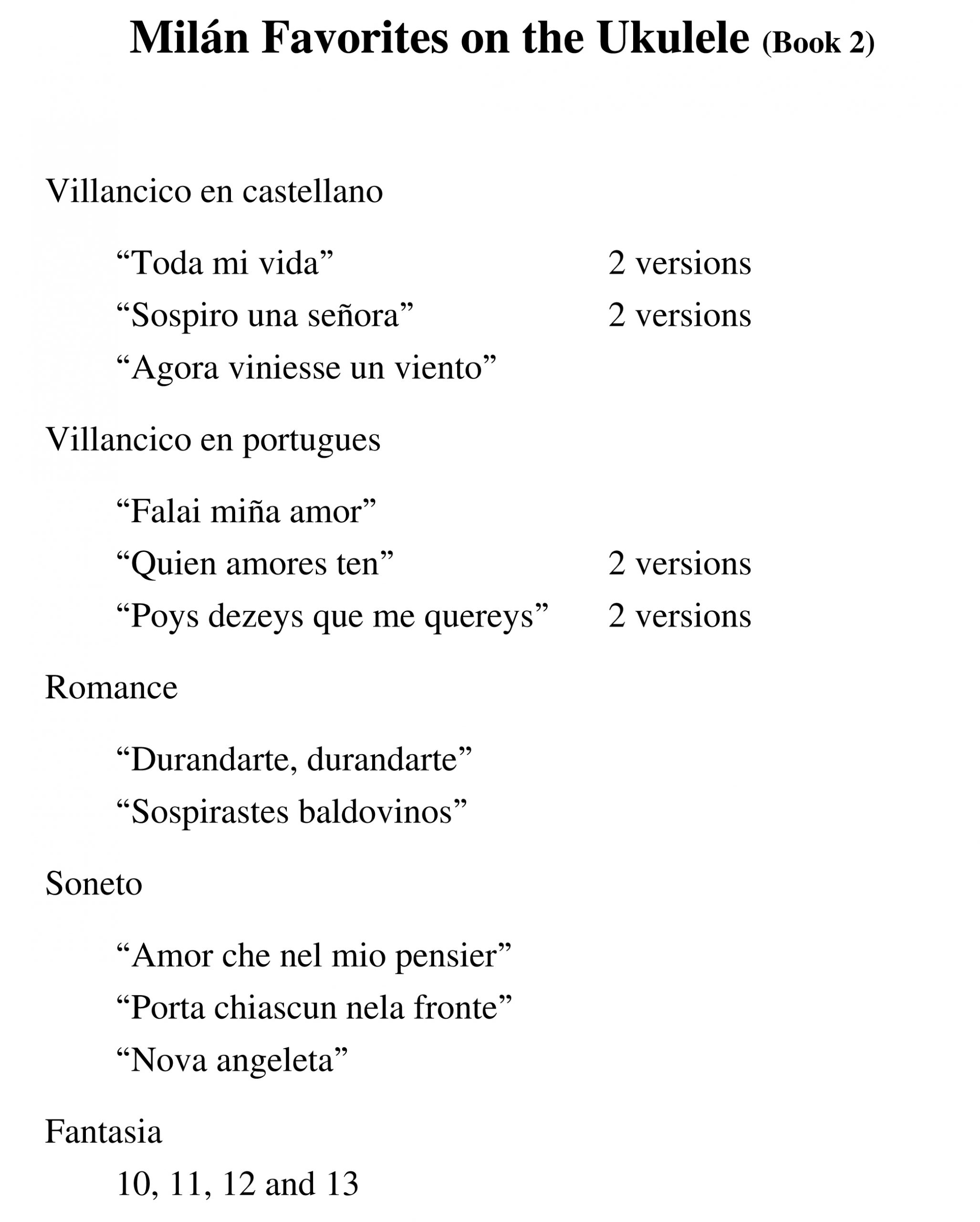
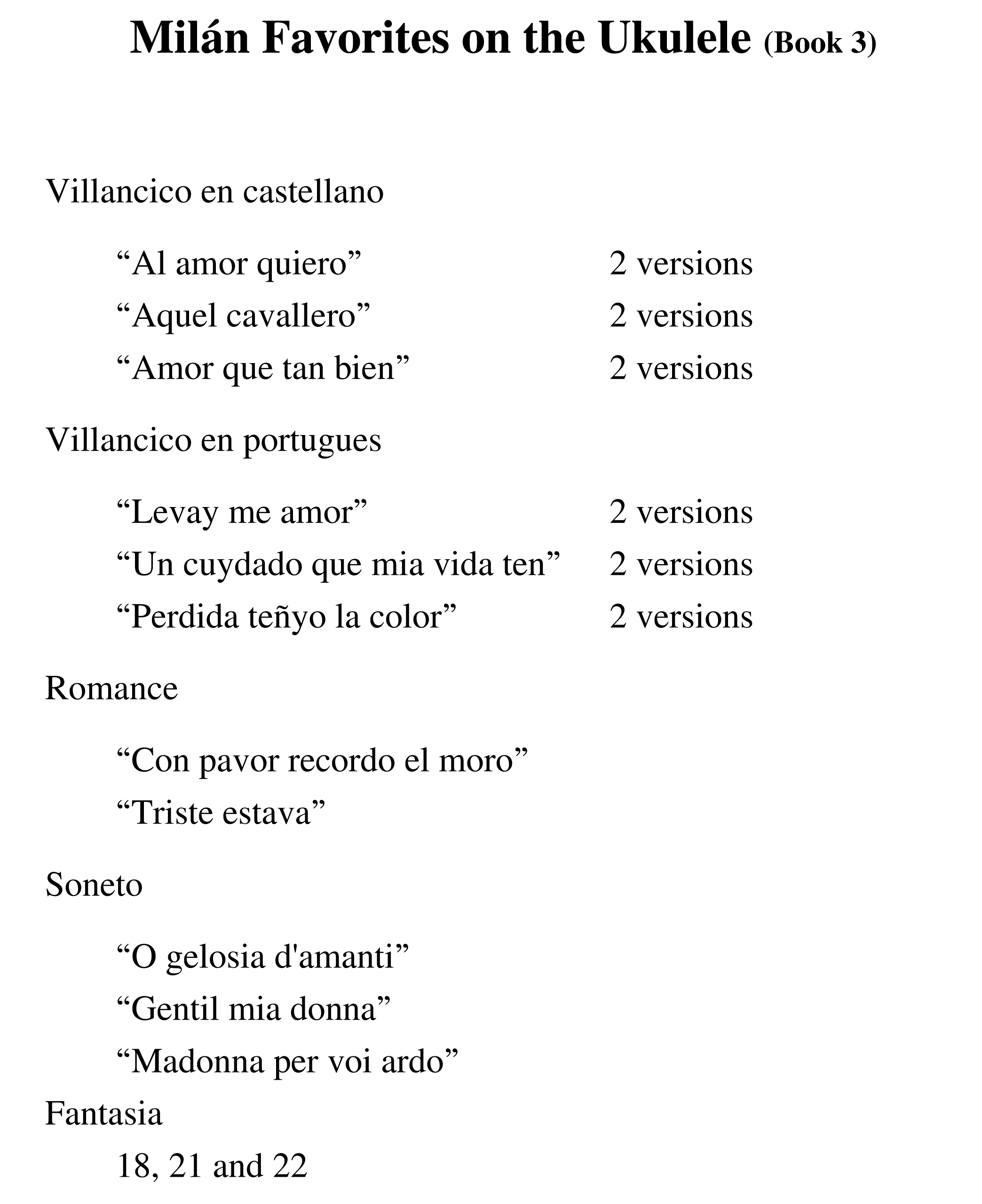
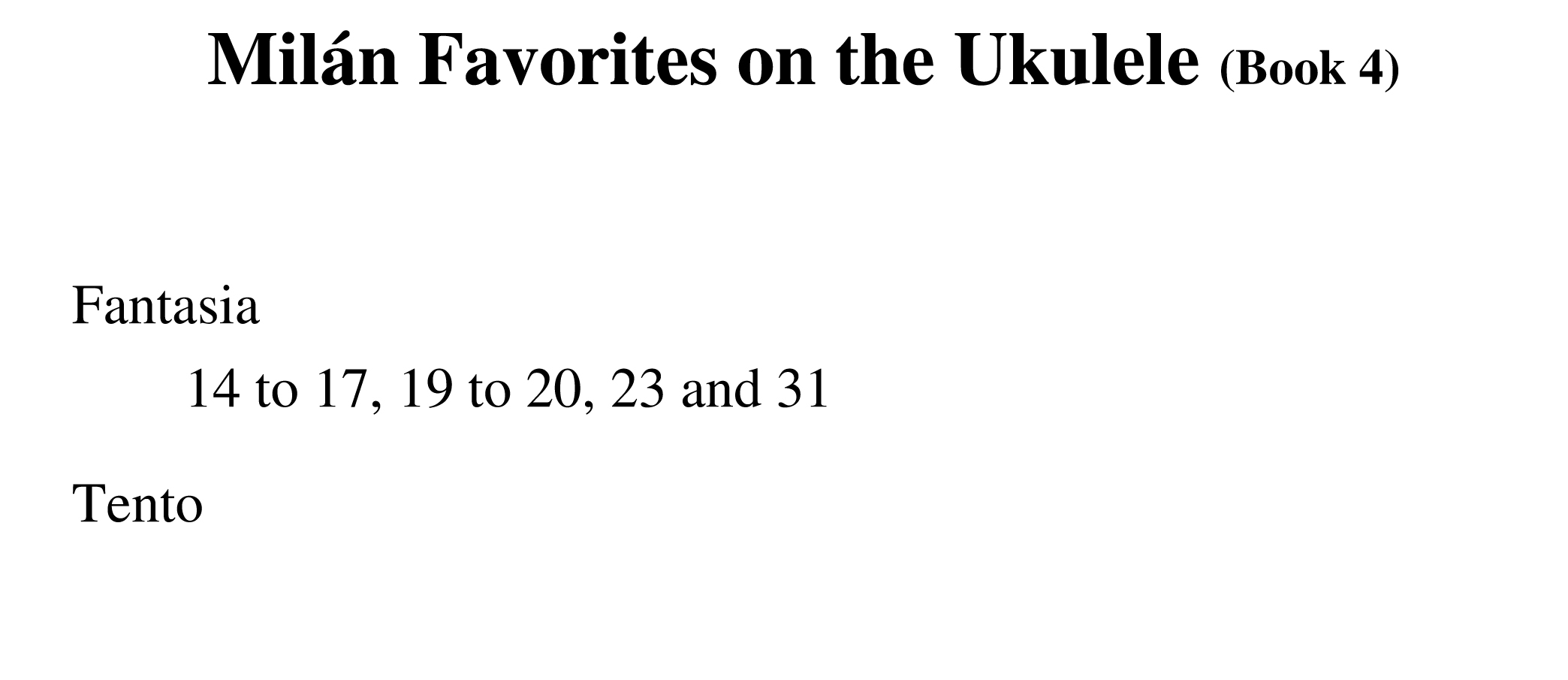
Update as of May 8, 2021 — Four books of arrangements of Milan’s music are now complete and available (click on an image to see an expanded view) …