Medieval music is ready

The Medieval Ukulele is now available on Amazon and Kobo. Here are the explanations of the arrangements and links to the recordings so you can explore the music from the 5th to 15th centuries …

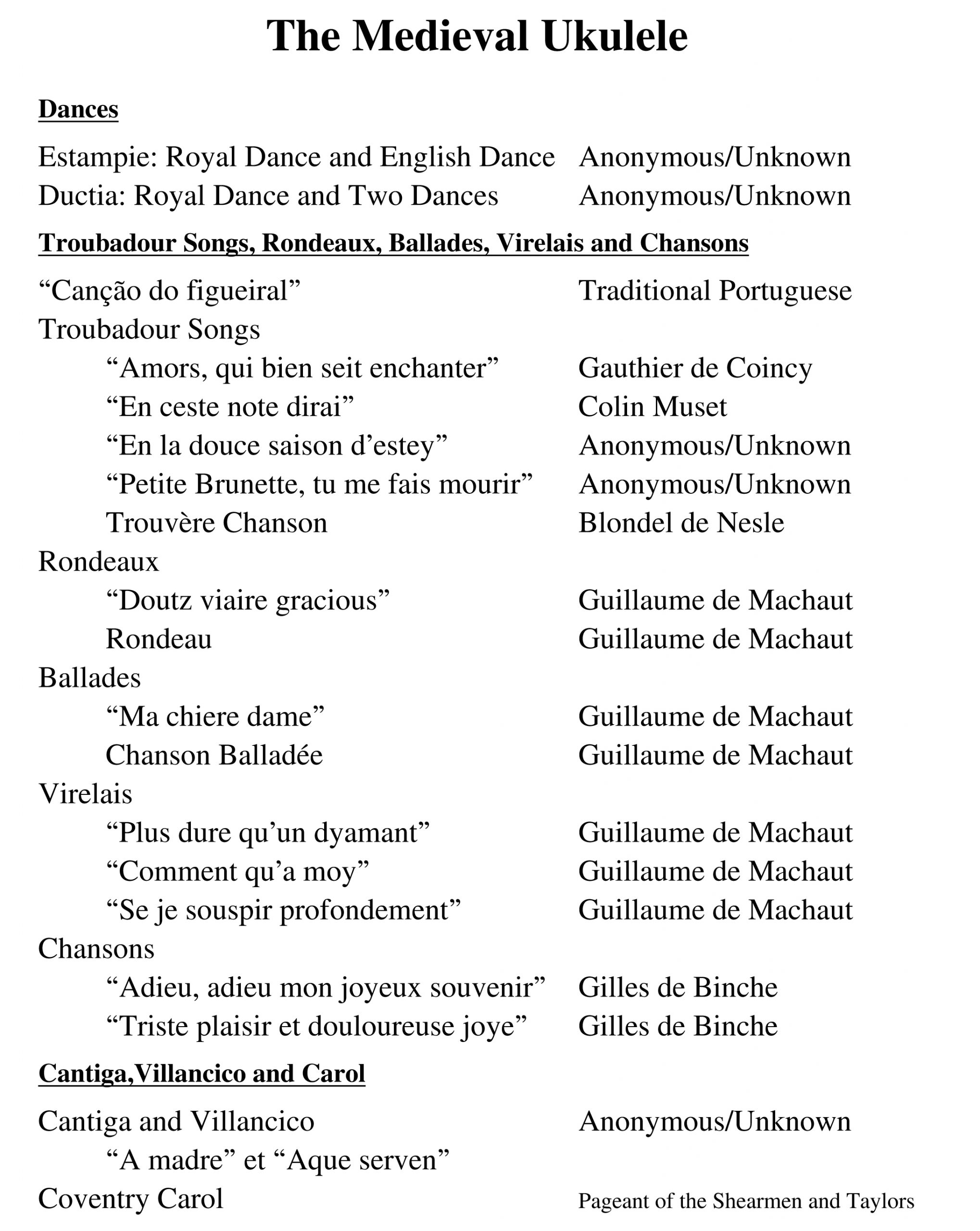
The Estampie is the first known genre of medieval era dance music, a popular instrumental and vocal form in the 13th and 14th centuries with a succession of repeated sections. The melody in a lively triple meter is monophonic (in soprano/alto range such as a recorder). However, the melody becomes polyphonic when accompanied by instrumentalists (in tenor range such as the crumhorn). They were played as entertainment for the wealthy during their feasts. https://youtu.be/zJuUqIpr3K
The Ductia as like the estampie but more regular. “The ductia is a melody that is light and brisk in its ascents and descents, and which is sung in carole by young men and girls, …. It influences the hearts of young girls and men and draws them from vanity, and is said to have power against that passion which is called love or ‘eros’.” (Johannes de Grocheio). https://youtu.be/zHtfU9zcmuw
This piece is my favorite … Canção do figueiral (Song of the fig-tree orchard) is celebrated as the oldest traditional song in Portuguese (about 12th century). https://youtu.be/cw9O3sTO0As
Most of the arrangements in this book are of songs. People who sang the secular songs of the middle ages were jongleurs or minstrels, first appearing around the 10th century. These actors, acrobats, fiddlers and singers moved from castle to castle.
A Troubadour is a composer and performer of Old Occitan lyric poetry during the High Middle Ages (1100–1350). The troubadour school or tradition spread to Italy and Spain. The texts of troubadour songs deal mainly with themes of chivalry and courtly love. Most were metaphysical, intellectual, and formulaic. Many were humorous or vulgar satires. https://youtu.be/dJFxSDy7ln8
There were three Formes Fixes of verse set to music between the late 13th and the 15th centuries. Each was also a musical form, generally a chanson, and all consisted of a complex pattern of repetition of verses and a refrain with musical content in two main sections. The rondeau is believed to have originated in dance songs.
A Chanson is in general any lyric-driven French song, usually polyphonic and secular. A singer specializing in chansons is known as a “chanteur” or “chanteuse”, and collection of chansons is a “chansonnier”. The earliest chansons geste were the epic poems performed to simple monophonic melodies. These usually recounted the famous deeds (geste) of past heroes, legendary and semi-historical. The chanson courtoise or grand chant was an early form of monophonic chanson, the chief lyric poetic genre of the trouvères. It was a song of courtly love, written usually by a man to his noble lover. A Burgundian chanson is a polyphonic French song of the late Middle Ages and Renaissance. The earliest chansons were for two, three or four voices, with first three becoming the norm. Sometimes, the singers were accompanied by instruments. https://youtu.be/UE4FTfIVLRQ
A Cantiga is a medieval monophonic song. Over 400 extant cantigas come from the Cantigas de Santa Maria, narrative songs about miracles or hymns in praise of the Holy Virgin. Derived from medieval dance forms, the 15th century Villancico was a type of popular song sung in the vernacular and frequently associated with rustic themes. With the decline in popularity of the villancicos in the 20th century, the term became reduced to mean merely “Christmas carol”. https://youtu.be/8j0Iy3-K-tQ
Coventry Carol was simply “Song 2” from the Pageant of the Shearmen and Tailors. It was named after the city of Coventry where theatrical performances about the theological mysteries of God’s creation were performed as early as 1392 until suppressed in 1579. https://youtu.be/siy0DaFPeKs
What’s Next – Medieval music

I was planning to start arranging music of the Classical and Romantic eras. The early to mid-19th century was considered “the golden age of the guitar” with many great performers who were also composers (Sor, Giuliani, Carcassi, Carulli and Aguado). This era was followed by the “dark period” (mid-19th to mid-20th century), despite great works by composers like Tarrega, when the guitar lost ground to the piano and became “old fashioned”. Of course, we all know that the classical guitar regained its status as a modern and delightful instrument and has become popular again — and, of course, the rise of the once lowly ukulele in the 21st century (if you haven’t seen it, I recommend watching the movie “Mighty Uke: The Amazing Comeback of a Musical Underdog” released in 2010).
However, I’ve decided to delay that, not because there aren’t any great works (there are), but because the music of those eras sounds so wonderful on the modern classical guitar with its additional 5th and 6th strings.
Instead, I’m heading in the other direction and have started arranging for an upcoming book, The Medieval Ukulele.
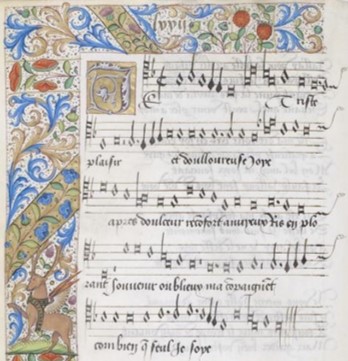
Illustration of a Medieval Score

A Branle Dance (with real dancers)

I talked about imaging the dancers when arranging a Branle.
You should watch one of the dances sometime — the most famous one is “Branle de l’officiel” which we know as “Ding Dong Merrily on High”. I’ve arranged this piece (it’s in the book “The Yuletide Ukulele”). Here is nice YouTube video of a group of students dancing to it. They are in costume but performing in an empty studio (you’ll have to image an appropriate setting).

How I select the music to arrange?

I’ve been asked how I select the music to arrange. Well, I play through a lot of music that I can find (original folios or other arrangements) based on the theme of the book I’m working on. It certainly improves my sight reading skills. I then select based on playability (some pieces are much too difficult for my purposes but I don’t shy away from challenging music) and enjoyability in terms of being able to listen to the music and liking it. Less than half of what I explore meets these criteria.

How does ancient tablature compare to modern musical notation and modern tablature?

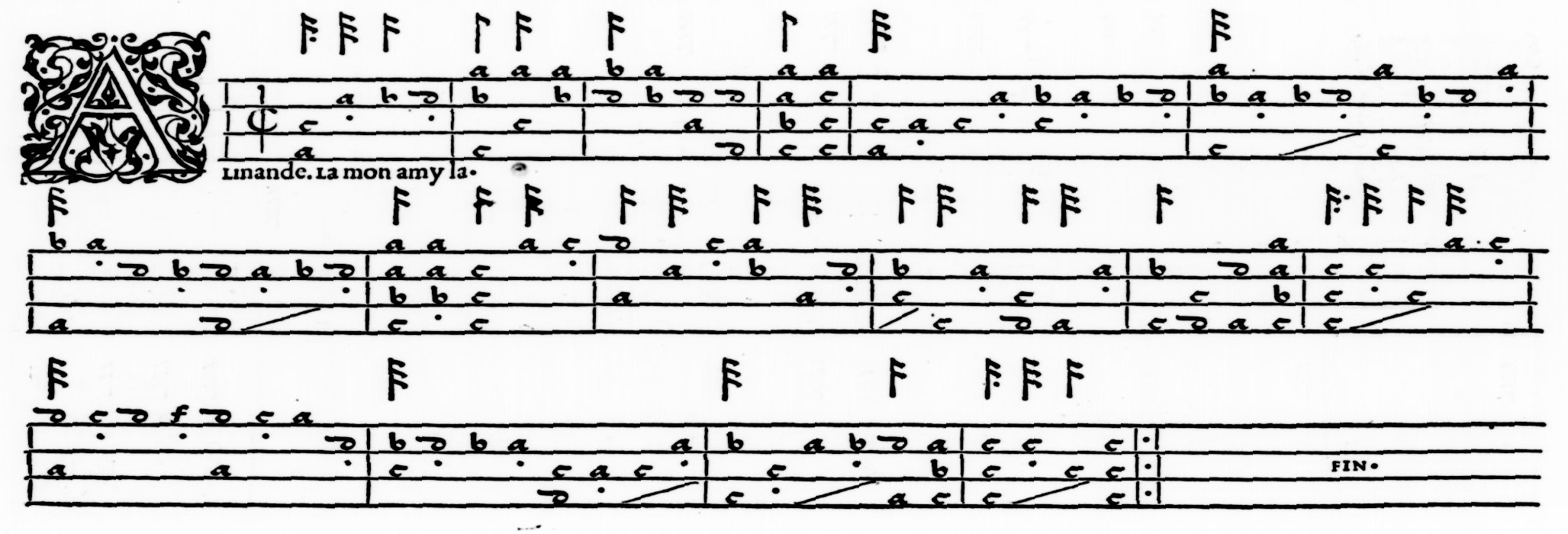
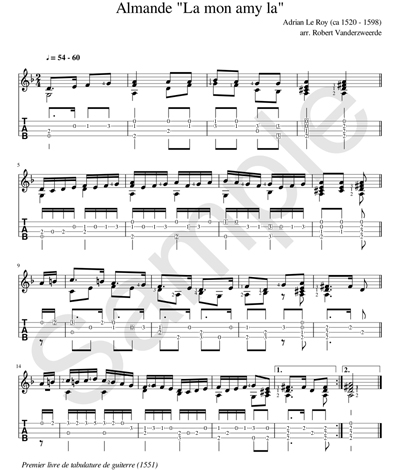
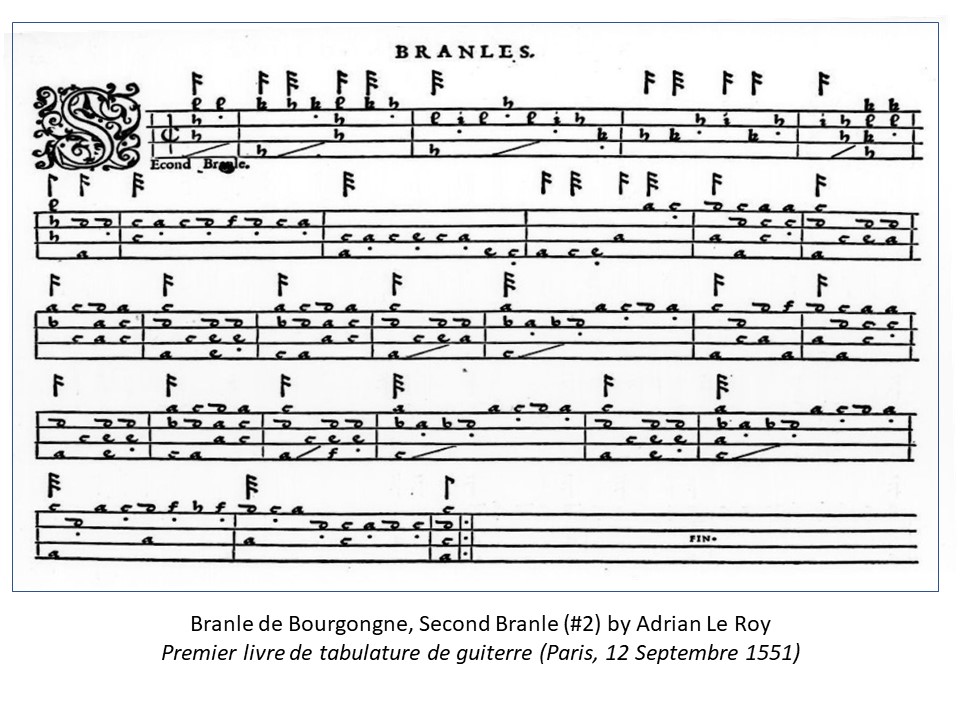
I’ll show two images of a specific piece so can compare the scores. In a previous post, I explained how to read the ancient tablature.
This piece shows another challenge in arranging this music. If you look at bars 9 to 10 in the original tablature, there is no indication on how this is actually played. In the modern music (bars 10 to 11), I have separated out the upper melodic part (which is usually played with the fingers) from the lower supporting harmonic part (which is usually played with the thumb) which makes it easier to interpret and play the piece.
I also put in a first and second ending on the repeat. This gives the piece a definitive ending that the modern ear will more easily recognize.
This piece utilizes what is known as a Picardy third or cadence. The music is in D minor but the end of each phrase ends on a D major chord, which gives it an emotional uplift.
The modern score does not include any dynamic markings (even the tempo marking is modern and not in the original score) and players at that time would have played this using their own interpretation or ornaments (e.g. trills) based on the conventions in the 16th century.
Have fun and see if you can spot other challenges between the two scores (yes, there is one other major difference).
Illustration of a Renaissance Score (Almande)
Illustration of a Modern Score (Almande)

How do you read ancient tablature?

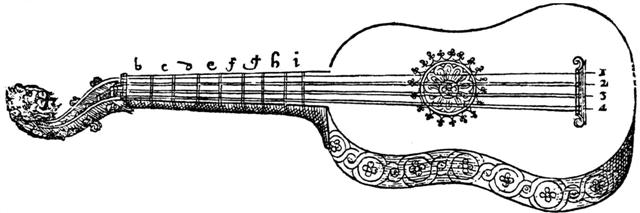
It’s not that difficult. I’ve shown a sample score as well as an illustration of a Renaissance guitar (you can do the same comparison for lutes and lute tablature).
The letters in tab correspond to the frets (a is an open string, b is the first fret, etc., with the letter j skipped by convention, and I’ve seen up to the letter k for the 9th fret and l for the 10th fret) and the horizonal lines correspond to the strings. The length of the notes is the vertical line above the strings — the single tail represents an quarter note, two tails are an eighth note, three tails are a sixteenth note, etc, and dot in the tail increases the note length by a half (e.g. a dotted eighth note). Keep playing the rhythm until it changes. The dot under the note says to play the note with your index finger.
Tablature is quite compact and “dense” and does not require a key signature. You can show a lot with a little.
Simple isn’t it. Please try it.
It does have some issues in that the upper and lower voices are difficult to separate, especially if they have different rhythms. It’s also hard to indicate phrasing and there are no dynamic markings.
Modern tablature is similar using numbers instead of letters for the frets, with zero indicating an open string (easier and quicker for the mind to grasp).
Illustration of a Renaissance Score (Branle)
Illustration of a Renaissance Guitar